
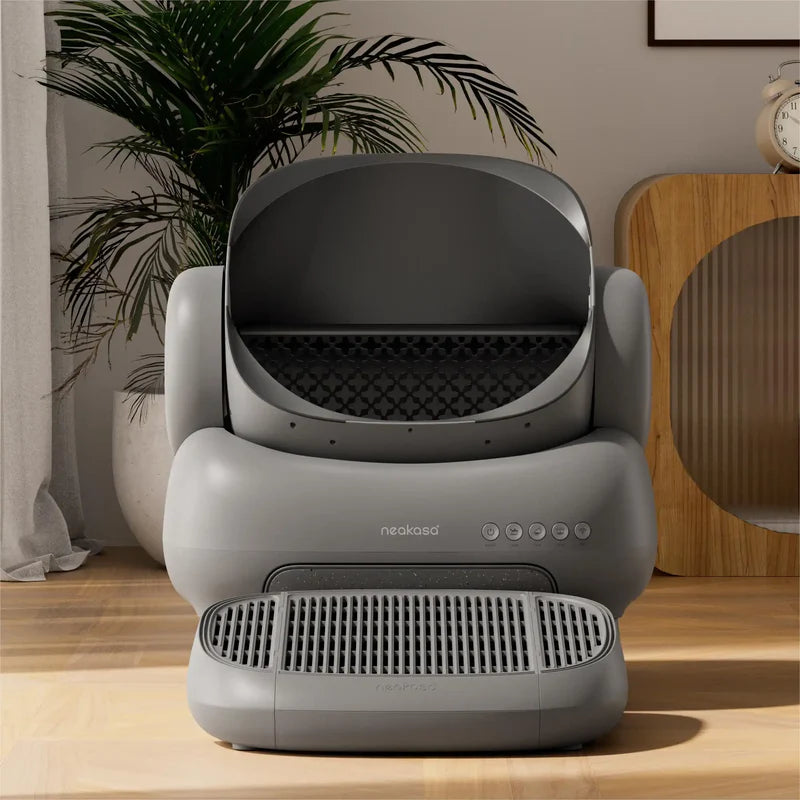
The best auto feeder for cats depends on their food and feeding routine. Choose a timed dispenser for dry food, a feeder with suitable cooling for prepared wet meals, or a rehydration feeder such as Neakasa Riko for compatible freeze-dried complete food.
The best auto feeder for cats is one that fits the meals your cat already enjoys and the parts of your day when you need help serving them. Start by deciding whether you want to automate a dry-food lunch, offer a prepared wet meal or have a compatible freeze-dried meal rehydrated at feeding time.
Perhaps breakfast and dinner are easy to manage, but a midday meal falls in the middle of your commute. Or you want a more consistent evening routine without preparing every portion by hand. Each situation calls for a different kind of feeding system.
This guide compares those systems through everyday use: what you put in, what happens at mealtime and what needs cleaning afterwards.
Which Part of Your Cat’s Feeding Routine Do You Want to Automate?
Before comparing capacity or app features, write down the meals you currently serve. Note the food format, who prepares each meal and where timing becomes difficult. This gives the feeder a clear role in your household.
Automating Dry Meals Between Wet-Food Feedings
A timed dry-food feeder can handle a daytime portion while you continue serving wet food in the morning and evening. This arrangement lets you keep familiar meals and automate the one that is hardest to manage.

Look for a dispenser compatible with the size and shape of your usual kibble. Check how its portion settings translate into grams, especially if you only need a small supplementary meal.
Count the automatically dispensed food together with everything you serve by hand. An extra scheduled meal should be part of the daily allowance, rather than an unnoticed addition. Cats Protection explains that cats can eat wet food, dry food or a combination, with appropriate complete food forming the basis of the diet.
Scheduling a Pre-Portioned Wet Meal
If the missing meal is a pouch or a portion of canned food, consider a feeder specifically designed to hold and serve that food. You prepare the portions in advance; the device makes a meal available at the chosen time.
The important questions are how the food is kept under suitable conditions, how many meals fit and how much preparation is needed before use. A covered compartment alone does not provide refrigeration.
Check the feeder’s instructions alongside the food’s storage directions, including what happens when a portion becomes accessible to your cat.
Preparing a Rehydrated Meal at Feeding Time
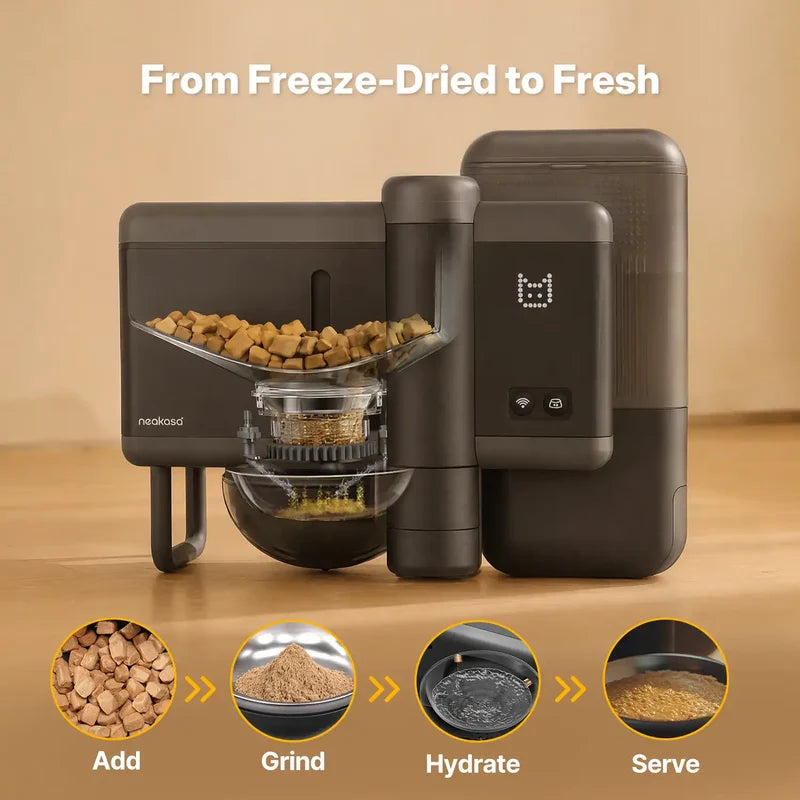
A freeze-dried rehydration feeder takes a different approach. Food remains dry until the machine combines a portion with water for serving.
This can suit owners who already use suitable freeze-dried complete food and want to automate its preparation. Instead of opening and dividing conventional wet food beforehand, you replenish separate food and water supplies.
The distinction matters when shopping: a machine that prepares a rehydrated meal does not necessarily accept canned food, pouches or food that has already been soaked.
Dry, Chilled Wet or Rehydrated Meals? Compare the Main Feeder Types
The most useful comparison follows the food from storage to the bowl. Begin with the format your cat eats, then compare devices within the appropriate category.
| What to compare | Timed dry-food feeder | Pre-portioned wet-food feeder with cooling | Freeze-dried rehydration feeder |
|---|---|---|---|
| Food used | Dry kibble | Permitted canned, pouch or other prepared wet food | Compatible freeze-dried food |
| Preparation | Fill the hopper and set portions | Divide meals and prepare the cooling system | Add food and water to separate containers |
| At mealtime | Releases dry food | Makes a prepared portion available | Portions food and adds water |
| Main checks | Kibble compatibility, dispensing consistency and jam prevention | Cooling method, compartment capacity and storage instructions | Food compatibility, preparation settings and cleaning access |
| Regular upkeep | Bowl, outlet and hopper | Meal trays and other food-contact parts | Bowl, water tank and food-contact parts |
| Main limitation | Usually unsuitable for ordinary wet food | Needs advance meal preparation; holding conditions vary | Compatible food |
For a household that only needs a dry lunch served, a reliable timed dispenser may cover the whole requirement. For a cat eating conventional wet meals, food storage and temperature management become central. For compatible freeze-dried diets, preparing a meal with water at serving time offers another route.
Gravity feeders sit outside this scheduled-meal comparison: they replenish the bowl as food is removed, rather than measuring meals at preset times.
Ice Packs and Active Cooling: Two Different Wet-Food Approaches
Some wet-food feeders use frozen packs placed beneath or around the food tray. These require freezer preparation and replacement according to the instructions. Their performance depends on the design and the conditions in which they are used.
Active-cooling models use a powered cooling system. Check the stated operating conditions, how food is held and what the device does if power is interrupted.

Neither category has a universal safe holding time. Follow the specific device and food instructions rather than relying on a general claim that any wet-food feeder can keep meals suitable for an entire day.
Smart Controls and Microchip Access Are Separate Features
An app describes how you control or monitor a feeder. Microchip recognition describes how access is managed. These features can accompany different food-handling systems.
Ask what you need each feature to accomplish. Remote schedule changes may help with variable working hours. Controlled access may matter when one cat steals another’s food. However, an identity-controlled lid does not automatically provide scheduled portioning, and a dispensing log does not by itself establish which cat ate the meal.
Compare the Daily Work Behind Each Feeding System
Automatic feeding changes the work involved in serving meals. Understanding the remaining tasks helps you choose a system you will be comfortable using every day.
Refilling and Meal Preparation
With a dry-food dispenser, you replenish the hopper and check that the outlet remains clear. A pre-portioned wet-food feeder requires you to prepare individual meals and maintain the relevant cooling arrangement. A rehydration feeder needs suitable dry food and clean water replenished separately.
Think about when you would do these jobs. Would preparing trays each morning fit your routine? Can you easily reach the water tank for washing and refilling? Container capacity is useful only when the associated maintenance is manageable.
Cleaning and Leftover Management
Look at the parts that food and water touch, how they detach and which cleaning methods are permitted. Do not assume every removable part is dishwasher-safe.

Food in a storage compartment and food already served into a bowl need different attention. Cooling before serving or adding water at mealtime does not remove the need to deal with leftovers. Follow the food and device instructions for cleaning and discarding uneaten portions.
Before buying, read the cleaning section of the manual. It often provides a clearer picture of ownership than a feature list.
Running Costs Beyond the Purchase Price
Compare the device price alongside compatible food, replacement consumables, batteries or electricity, and any optional paid app features. Check which costs are recurring and which are occasional.
There is no universally cheapest feeder category. The better-value option depends on the food you use, the tasks it handles and the maintenance you can sustain.
Where Does Neakasa Riko Fit in This Comparison?
A Different Way to Automate Moisture-Rich Meals
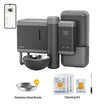
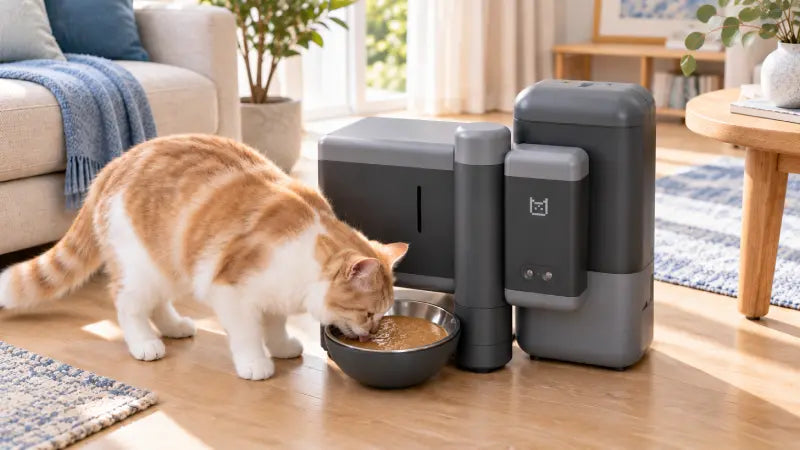
The Neakasa Riko Fresh-Made Automatic Wet Meal Feeder represents the freeze-dried rehydration approach. It grinds compatible freeze-dried food and combines it with water at feeding time. App controls support scheduling and feeding-history review, while adjustable water settings let owners change the amount added to a meal.

- Prepares fresh-made wet meals by grinding and rehydrating compatible freeze-dried food at mealtime.
- Customizes meal texture with an adjustable 1:1–1:5 water-to-food ratio.
- Supports precise 1–20 g portions and 20+ scheduled feedings per day through the app.
- Reduces frequent refilling with a sealed 3 L food container and 2.4 L water tank.
When This Feeding Approach Makes Sense
Riko can fit a routine built around compatible freeze-dried complete food, particularly when preparing individual rehydrated portions throughout the day is difficult. Scheduled small meals can support the routine you set while you are at work, with the daily food allowance divided accordingly.
It is worth considering if you want to automate both serving and part of the preparation process. Allow time for replenishing supplies, cleaning the food-contact parts and observing how your cat uses the feeder.
Check Food Compatibility Before Switching
Riko uses room-temperature water; it does not heat water or refrigerate conventional wet food. It is not intended for filling with canned food, pouch food or already rehydrated meals.
Choose compatible complete food suitable for your cat.
A Simple Checklist Before Your First Automated Meal
Set up the feeder while you are home so you can check both the machine and your cat’s response.
- Confirm food compatibility. Follow the instructions for food format, dimensions and handling.
- Plan the whole day. Include automatic meals, hand-served food and treats in the feeding allowance.
- Test actual portions. Weigh several dry portions where appropriate and check that servings match your settings.
- Introduce the device calmly. Let your cat investigate, then observe an entire feeding cycle.
- Review interruption behaviour. Understand what happens during a power or internet outage and keep a backup feeding plan.
- Make upkeep routine. Arrange cleaning, refilling, leftover removal and direct checks on your cat.
Frequently Asked Questions
Can I Use an Automatic Feeder Alongside Hand-Fed Wet Meals?
Yes. You can use a timed feeder for a dry-food meal and continue serving wet food yourself. Decide what proportion of the daily allowance each meal provides, rather than simply adding automatic portions to the existing routine. Check that the foods and quantities together suit your cat’s needs.
Do I Need to Change My Cat’s Food to Use an Automatic Feeder?
Often, you can choose equipment that supports the food your cat already eats. Check compatibility before ordering. If a change is needed, introduce the new food gradually; Cats Protection recommends a gradual transition. For a cat on a prescribed diet, discuss any proposed change with your vet first.
Are Ice-Pack and Refrigerated Cat Feeders the Same?
They use different cooling approaches. An ice-pack feeder relies on packs prepared in a freezer, while an actively cooled model uses power to provide cooling. Compare the actual operating and food-storage instructions. A timer or closed lid alone does not show that a device can maintain suitable conditions for wet food.
What Is the Best Automatic Cat Feeder for Multiple Cats?
The best automatic cat feeder for multiple cats should help each cat receive the right food and portion. If your cats eat different diets or steal each other’s meals, consider individual feeders with microchip-controlled access or separate feeding stations. Check whether the device also offers scheduled dispensing, as access control alone does not automatically portion meals. A larger food container does not ensure equal intake.
How Should I Set a Feeding Schedule on an Automatic Cat Feeder?
Set meal times around your cat’s age, usual eating habits and your household routine. Divide the daily food allowance between scheduled portions and any meals you serve by hand. For help planning a routine, read Best Feeding Schedule for Cats: A Practical Daily Routine by Age and Lifestyle, which explains how to adapt meal timing to different life stages and lifestyles.
Conclusion: Choose a Feeder That Fits Your Cat’s Everyday Meals
Finding the best auto feeder for cats starts with the meal you need help serving. Match the system to the food, compare the preparation and cleaning involved, then check local supplies and support. A dry dispenser can cover a daytime kibble meal; a suitable chilled feeder can serve prepared wet portions. For compatible freeze-dried complete food, Neakasa Riko offers scheduled preparation with added water. Choose the approach that fits your household’s everyday routine, and test it while you are home so you can confirm that it works for your cat.

Leave a comment
This site is protected by hCaptcha and the hCaptcha Privacy Policy and Terms of Service apply.