

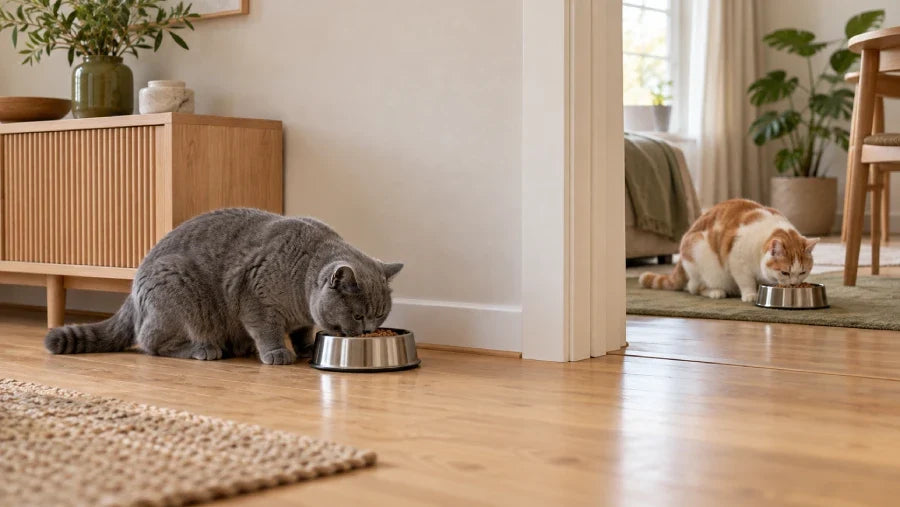
One cat finishes quickly and walks straight to the other bowl. The second cat steps back, leaving you unsure whether both have eaten enough. An automatic cat feeder for two cats can help with meal timing, but the feeding arrangement matters just as much as the machine.
Start by giving each cat a comfortable place to eat. Then plan individual portions and decide which meals to automate. This guide uses a home with limited space as an example. You can adapt the same steps to your rooms, your cats’ behaviour and the food each cat needs.
Quick Summary
Using an automatic cat feeder for two cats starts with a separate, comfortable eating space for each cat. In a small home, use different rooms or visual barriers and check that both cats can reach their food. Choose equipment around their diets and portions, then observe meals before relying on automatic feeding.
Why Two Cats May Need Separate Meals
Shared space can hide feeding tension
Two cats eating in the same room may look settled. However, one might wait until the other leaves, retreat when approached or rush through a meal. Watch what happens before and after eating, as well as at the bowl. AAFP guidance identifies staring and blocking access to resources as possible signs of intercat tension.
A shared feeding area can make these patterns easy to miss. An empty bowl tells you that food has disappeared. It does not tell you which cat ate it.
Different needs require individual access
One cat may need a different food, a different portion or more time to finish. Each needs access to the meal intended for them. Separate stations make it easier to offer individual meals and observe the result.
If appetite, weight or eating behaviour changes, speak to your veterinarian. Changing the feeder alone may not address the cause.
Observe Your Cats Before Moving Their Feeding Stations
Notice who reaches the food first
Observe several familiar meals before rearranging anything. Note who arrives first, whether either cat pauses nearby, and who returns to eat leftovers. Include meals when you are usually busy, since you may miss interactions while preparing your own food.
Keep brief notes for each cat. Look for a recurring pattern rather than judging the arrangement from one quiet meal.
Map routes and quiet areas
Sketch your doors, main walkways, resting areas and litter locations. Mark possible feeding spots away from busy routes. Check whether one cat could block the other at a doorway or corner.
Choose locations that you can reach easily for supervision and cleaning. A station hidden behind furniture is less useful if checking its bowl becomes difficult.
Separate Feeding Stations for Cats in a Small Home
Use different rooms when possible
For example, place one station in a quiet part of the kitchen and another in a spare room. Start by checking that each cat is comfortable in their assigned space. If a door will be closed during meals, introduce that arrangement while you are nearby.
Prepare each room before serving food. Avoid shutting a cat into an unfamiliar space just as a machine starts dispensing. Once both cats have finished, remove remaining food before restoring shared access. For longer separation, provide each cat with water, a resting place and a litter tray away from food.
Create visual separation in one room
When separate rooms are unavailable, try placing stations on different sides of a stable cabinet or an opaque divider. The aim is to reduce direct watching across the eating area. Veterinary guidance supports distributing resources with visual separation.
Check the divider from the cats’ height. A gap beneath it may leave a clear view. Position it so neither cat has to squeeze past the other to reach food.

A visual barrier does not restrict access. A cat can still walk around it, so supervise meals and adjust the arrangement if either cat approaches the other bowl.
Keep each station accessible
Give each cat enough room to approach and leave the feeding station. A floor-level station may be easier for an older cat to reach. Choose a spot that suits each cat’s mobility. Avoid making cats jump to reach their food.
When choosing a cat feeder for multiple cats, allow space for the cat as well as the device. Measure the location in cm, including room to remove the bowl and open any containers.
| Layout | Suitable space | Preparation | Behaviour to watch | Remaining limitation |
|---|---|---|---|---|
| Different rooms | Two comfortable rooms | Familiar stations and controlled doors | Settling, eating and waiting calmly | Requires managing access |
| Visual separation | One room with usable corners | Stable, opaque furniture or divider | Staring, detours and bowl switching | Cats can walk around the barrier |
| Controlled turns | A shared room used at different times | Comfortable separate waiting area | Distress while waiting or rushing food | Needs active supervision and access control |
How to Feed Cats Separately Step by Step
Give each cat a familiar station
Begin with familiar bowls and food. Let each cat become comfortable eating in the chosen location before introducing a feeder. Change one part of the routine at a time so you can identify what needs adjustment.
If you also want to change food, establish acceptance separately. A cat refusing a new recipe may not be objecting to the station itself. Avoid moving a reluctant cat repeatedly between locations during the same meal.
Start with supervised meals
Prepare both portions before inviting the cats to their stations. Stay nearby without crowding them. Watch whether each cat starts, continues and finishes eating comfortably.
Afterwards, remove leftovers and clean as needed. If one cat repeatedly leaves to visit the other station, use more effective physical separation. Do not rely on calling the cat back every time.
Staggered meals also need controlled access. Feeding the slower cat later will not protect their meal if the faster cat can enter the room. Choose a waiting arrangement that both cats tolerate.
Adapt the system for additional cats
For additional cats, reassess the locations, routes and supervision needed for every individual. An automatic feeder for multiple cats with a larger hopper does not create more independent eating spaces.
Introduce each new station gradually. Check that adding a bowl has not narrowed an existing route or placed one cat’s food beside another cat’s preferred resting place.
Build a Feeding Plan for Each Cat
Use grams and energy per serving
Record the food and daily allowance separately for each cat. Check the food’s energy information because equal weights of different recipes can provide different amounts of energy. Do not simply divide a combined allowance in half.
Use a kitchen scale for food measured in g. For rehydrated meals, keep the dry food weight and added water weight separate in your notes. Added water changes the meal’s weight without adding food energy.

Match the routine to each cat
Create a personalised feeding plan for each cat. Follow the food’s feeding instructions and consider your cat’s needs. Ask your vet for advice on therapeutic diets, weight management or changes to feeding.
Check how much each cat actually eats. Adjust the setup if one often leaves food or eats the other’s portion. For more tips, read our cat feeding schedule guide.
Use an Automatic Cat Feeder for Two Cats Within the Routine
Automate meals at the separate stations
An automatic cat feeder for multiple cats needs to fit the station layout. Decide which location each device will serve and how the intended cat will reach it. Two devices in the same accessible corner may still leave one cat eating from both.
Scheduling, identifying a cat and measuring individual intake are separate functions. Check what the chosen model actually provides. A record of food dispensed is not proof that a particular cat ate that amount.
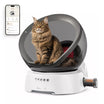
If your cat eats compatible freeze-dried food, consider Neakasa Riko for a dedicated feeding station. It adds water to prepare fresh meals at feeding time. Use the app to schedule meals around your cat’s routine. Set up a separate feeding area for your other cat.
Test schedules while you are at home
Try your automatic feeder for two cats while you can watch the results. For example, 07:00, 13:00 and 19:00 could be test times, not a recommended schedule for every cat.
Confirm that both cats reach their meals and that portions match the plan. Check the manufacturer’s instructions for offline operation and power backup. Verify these functions safely before depending on them during an absence.
Check food and clean bowls every day
Check supplies, leftovers and food-contact parts daily. Wash and dry bowls after use, following the cleaning instructions. FDA guidance also advises prompt refrigeration or disposal of leftover canned and pouched food.
For rehydrated meals, follow the food maker’s handling instructions and the feeder guide. Adding water does not make an old meal fresh again. Schedule meals around when food can be checked and bowls cleaned.
Using Neakasa Riko for a Separate Wet Meal Station
Prepare compatible freeze-dried food at mealtime
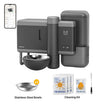
The Neakasa Riko Fresh-Made Wet Meal Feeder makes scheduled feeding easier. It grinds compatible freeze-dried cat food and adds room-temperature water at mealtime. You can also choose Food Only mode to grind and serve the food without adding water. For main meals, choose food labelled as complete pet food. Check that it suits your cat’s life stage.

- Three Flexible Feeding Modes: Choose Water Only, Food Only (grinds and serves freeze-dried food), or Mix (grinds and rehydrates freeze-dried food).
- Customizes meal texture with an adjustable 1:1–1:5 water-to-food ratio.
- Supports precise 1–20 g portions and 20+ scheduled feedings per day through the app.
- Reduces frequent refilling with a sealed 3 L food container and 2.4 L water tank.
Introduce the station gradually
Begin with a small supervised serving. Check food acceptance, texture and your cat’s response to the device. Its two stainless steel bowls support rotation during cleaning; they do not create two independently accessible feeding stations.
For two cats, plan how the second cat will eat elsewhere. If either cat can visit both stations, you still need supervision or suitable access control. Follow the Neakasa Riko User Guide for setup, modes and daily care.
Frequently Asked Questions
Is a two cat auto feeder enough in a small flat?
An automatic cat feeder for 2 cats may suit cats that eat calmly and receive suitable portions. A two-bowl design still needs observation. Check whether each cat stays at their own meal. A compact machine does not replace separate access when one cat takes the other’s food.
How can I feed cats separately without separate rooms?
Try stable furniture or an opaque divider to create visually separate stations. Supervise meals because either cat may walk around the barrier. If bowl switching continues, consider controlled turns with a comfortable waiting area. Observe whether both cats can eat without being watched or displaced.
Should two cats eat at the same time?
They can eat at the same time at separate stations if both are comfortable. Different meal times can also work, but you must manage access. A cat that has already eaten may still take another meal. Choose the arrangement around their observed behaviour and individual plans.
Can Neakasa Riko serve wet food for two cats?
Yes. Riko can prepare wet meals for a two-cat household. Mix mode grinds compatible freeze-dried cat food and adds water at mealtime. It does not use canned or pouched wet food. You can also choose Water Only mode or Food Only mode, which grinds and serves freeze-dried food without adding water.
Build a Calm Feeding Routine for Both Cats
Start with a comfortable station for each cat. Set individual portions, practise supervised meals and test any automated schedule while you are at home. Keep checking bowls, leftovers and changes in eating behaviour.
If fresh rehydrated meals fit your cats’ diets, explore Neakasa Riko as part of that routine. Pair it with the space and access arrangements each cat needs. Review the setup whenever meals become rushed, one cat starts avoiding food or your household changes. A useful routine is one you can maintain and adjust for both cats.


Leave a comment
All comments are moderated before being published.
This site is protected by hCaptcha and the hCaptcha Privacy Policy and Terms of Service apply.